|
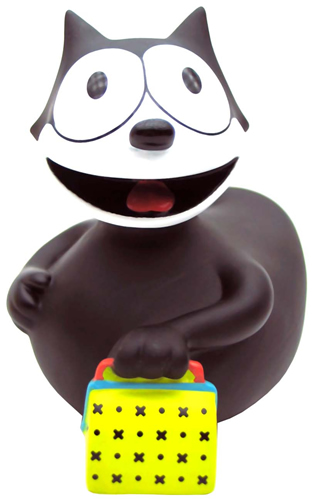
Felix the Cat
Paramount Pictures distributed the
earliest films from 1919 to 1921.
Margaret J. Winkler distributed the
shorts from 1922 to 1925, the year when
Educational Pictures took over the
distribution of the shorts. Sullivan promised them one new Felix
short every two weeks.The combination of solid animation, skillful
promotion, and widespread distribution sent Felix's popularity
soaring to new heights.
By 1923, the cat was at the peak of his film
career.
Felix in Hollywood, a short
released during this year, plays upon Felix's popularity, as he
becomes acquainted with such fellow celebrities as
Douglas Fairbanks,
Cecil B. DeMille,
Charlie Chaplin,
Ben Turpin, and even censor
Will H. Hays. His image could be
seen on clocks, Christmas ornaments, and as the first giant balloon
ever made for
Macy's Thanksgiving Day Parade.
Felix also became the subject of several popular songs of the day,
such as "Felix
Kept Walking". Even
Paul Whiteman, the king of jazz
himself, did a bit on the frisky feline. Sullivan made an estimated
$100,000 a year from toy licensing alone.With the character's
success also emerged a handful of new costars. These included
Felix's master
Willie Brown, a foil named
Skiddoo the Mouse, Felix's nephews
Inky, Dinky, and Winky, and his
girlfriend Kitty.
Given the character's unprecedented popularity and
the fact that his name was partially derived from the Latin word for
"lucky", some rather notable individuals and organizations adopted
Felix as a mascot. The first of these was a
Los Angeles
Chevrolet dealer and friend of Pat
Sullivan named Winslow B. Felix who first opened his showroom in
1921.
The three-sided neon sign of Felix Chevrolet,
with its giant, smiling images of the character, is today one of
LA's best-known landmarks, standing watch over both
Figueroa Street and the
Harbor Freeway. Others who adopted
Felix included the 1922
New York Yankees and aviator
Charles Lindbergh, who took a Felix
doll with him on his historic flight across the
Atlantic Ocean.
This popularity persisted. In the late 1920s, the
U.S. Navy's Bombing Squadron Two (VB-2B) adopted a unit insignia
consisting of Felix happily carrying a bomb with a burning fuse.
They retained the insignia through the 1930s when they became a
fighter squadron under the designations VF-6B and, later, VF-3,
whose members
Edward O'Hare and
John Thach became famous Naval
Aviators in
World War II. After the world war a
US Navy fighter squadron currently
designated
VF-31 replaced its winged
meat-cleaver logo with the same insignia, after the original Felix
squadron had been disbanded. The carrier-based night-fighter
squadron, nicknamed the "Tomcatters," remained active under various
designations continuing through the present day and Felix still
appears on both the squadron's cloth jacket patches and aircraft,
carrying his bomb with its fuse that has yet to burn down.
Felix is also the oldest high school mascot in the
state of
Indiana, chosen in 1926 after a
Logansport High School player brought his plush Felix to a
basketball game. When the team came from behind and won that night,
Felix became the mascot of all the Logansport sports teams.
In 1954,
Joe Oriolo took over and began a new series of Felix cartoons on
television. Oriolo went on to star Felix in 260 television cartoons
distributed by
Trans-Lux starting in 1958. Like the Van Beuren studio before,
Oriolo gave Felix a more domesticated and pedestrian personality,
geared more toward children, and introduced now-familiar elements
such as Felix's Magic Bag of Tricks, a satchel that could assume the
shape and characteristics of anything Felix wanted. The program is
also remembered for its distinctive
theme song written by
Winston Sharples:
-
Felix the Cat,
-
The wonderful, wonderful cat!
-
Whenever he gets in a fix,
-
He reaches into his bag of tricks!

$11.99
|
|